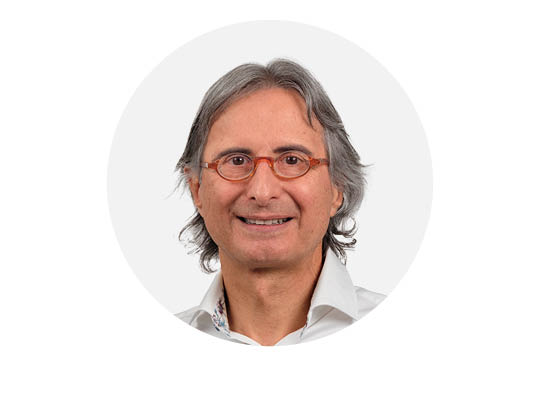
Interview with Dr. med. dent. Konrad Meyenberg: Precision, progress, and purpose in implantology
«Technology, materials, and an understanding of engineering are critical for reconstructive success.»
Dr. Konrad Meyenberg is widely recognized for his exceptional contributions to prosthodontics and implant dentistry, particularly where science, engineering, and esthetics converge. His career spans decades of innovation, mentorship, and cross-disciplinary learning – all shaped by a relentless focus on technical improvements and clinical precision.
Early Innovation and Interdisciplinary Experience
«I initially worked in private practice, where I gained my first experience with ceramic implants.»
Dr. Meyenberg’s implantology journey began in private practice, where early experiences with all-ceramic implants taught him hard lessons about material limitations. «I had quite a few failures due to fractures,» he remembers. These failures ultimately led him back to academia, where he became an assistant and later senior assistant at the Department of Crown and Bridge Prosthodontics in Zurich, under Prof. Schärer from 1988 to 1992.
There, he gained hands-on experience with systems like Brånemark, IMZ, Straumann, and the HATI system. «I used the HATI system in an interdisciplinary setting with oral surgery. It was very innovative,» he recalls. «It could be used for immediate implantations, despite the challenges of the time. What was especially interesting was the precision and elegance with which the suprastructures could be screwed on, using relatively small screws, including smart secondary transverse tension screws.»
This exposure taught him the value of engineering design in clinical outcomes: «precision, connection, quality, and design all had a major influence on patient outcomes.»
Lessons Through Contrast and Comparison
«That made us look for systems where esthetics were easier to manage.»
These early comparisons influenced Dr. Meyenberg’s later shift to the Thommen Medical system. «We had many successful, reconstructive outcomes with it,» and the experience highlighted the challenges seen with other systems. «For example, with external hex connections, screw loosening, or with prosthetic options that were esthetically unappealing.»
A Mentor’s Influence on Thinking and Craft
Dr. med. dent. Konrad Meyenberg
One of the most influential figures was Richard Lazzara – an excellent clinician and innovative thinker.
Among the many influential figures in his career, Dr. Meyenberg names Richard Lazzara as a key mentor. His 3i system «was the first to offer attractive, reliable superstructure parts, for both screw-retained and cemented restorations.»
From Lazzara, he also learned the technical nuances of implant mechanics. «We were confronted with the concept of torque and how important friction is. Screw-loosening issues in external hex systems were elegantly resolved by emphasizing precision and using special materials, such as gold-coated steel screws.»
More broadly, international collaboration shaped his career. «During my career, I met the key clinicians from Switzerland, the US, Sweden, Germany, Italy, and France. It was an incredible experience. Sharing knowledge and building a network helped me grow, and ultimately allowed me to contribute something of my own to the field.»
A Clear Vision for the Future
«What’s clear today is that we’ve come a long way.»
For Dr. Meyenberg, the future of implantology lies in building on knowledge and creating biologically intelligent designs. «Based on negative experiences with rough surfaces in the collar area, we can now clearly recommend using implants with machined surfaces in the soft tissue region. These significantly reduce the risk of peri-implantitis without any clinical drawbacks.»
He is also critical of conical connections. «Flat connections allow for much greater precision. In combination with so-called hybrid or soft-tissue level implants, they also provide better biological outcomes.»
He mentions superhydrophilic surfaces with alkaline pH as a major step forward. They «offer antimicrobial effects. This is particularly beneficial in the soft tissue region – creating an ideal microbiological environment right from implantation. That’s unique to the Thommen Medical system and very exciting.»
As for zirconia implants? He remains skeptical. «They still have too many limitations: Two-piece designs are difficult, screw retention is problematic, and small diameters are an issue. Since we can already use full-ceramic restorations, there’s no real need to make the implant itself from ceramic.»
Advice to the Next Generation
«Don’t just hang a sign outside your practice and call yourself a specialist, pursue a structured education.»
Dr. Meyenberg’s message to young clinicians is strong and clear: invest in formal education. «Get a proper qualification, either through a university or high-quality postgraduate program. Without proper training, you risk frustration from failures.»
He emphasizes this is not just for the dentist’s benefit. «Above all, the patient outcome must be the focus. We need to dedicate ourselves to providing implantology at a high technical and biological standard.»