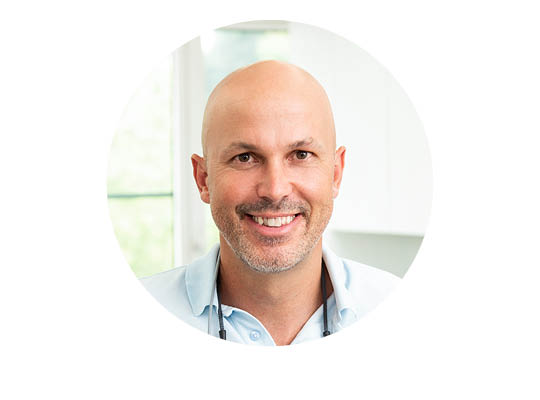
Interview with Dr. med. dent. Thomas Truninger: Pushing boundaries in implantology.
«Only those who keep a beginner’s mind and at the same time become experts in their field can grow and improve.»
Dr. Thomas Truninger’s career in implantology has been defined by curiosity, innovation, and a dedication to both teaching and clinical excellence. With more than two decades of experience, he has played a vital role not only in private practice but also in the academic training of future specialists. His journey reflects a deep commitment to staying open to new ideas while never losing sight of surgical fundamentals.
A Career of Continuous Evolution
«I placed my first implant over 20 years ago. Over time I realized that it is so much more than simply placing a screw into the jaw.»
Dr. Truninger’s path into implantology began as an assistant in a private practice setting, but it wasn’t long before he understood the complexity behind the discipline. His early experience drove him to pursue a specialization in reconstructive dentistry under Prof. Christoph Hämmerle, followed by advanced training in implantology.
Today, he shares that knowledge as a senior part-time lecturer at the Clinic for Reconstructive Dentistry, led by Prof. Ronald Jung. «For almost ten years now, I have been training future specialists in implantology, and I really enjoy this work,» he says.
In his private practice, Dr. Truninger integrates advanced, internationally recognized methods such as the Khoury shell and the socket-shield techniques «and then, in part, I introduce them back at the university to push the boundaries a bit,» he explains. «The excitement of expanding those limits is something I share with international experts worldwide.»
Challenges and the Value of FlexibilityExperience
Dr. med. dent. Thomas Truninger
Good planning and preparation before surgery are enormously important.
Over the years, Dr. Truninger has seen his fair share of complex cases and intraoperative surprises. «I’ve had to pull many chestnuts out of the fire,» he reflects. Fortunately, his growing experience in complication management has become a key strength. Implantologists «need enough flexibility and techniques at hand to be able to respond as appropriately as possible in an unpredictable situation,» he notes.
Still, he emphasizes that the work can be humbling: «I still break into a sweat from time to time and am glad to have a network of enthusiastic colleagues worldwide with whom I can discuss delicate cases and exchange ideas.» This openness to collaboration and shared learning underscores his approach to ongoing professional development.
The Power of Mentorship and Openness
«I learned how important a well-functioning team is for daily work.»
Mentorship has played a significant role in Dr. Truninger’s career, both in shaping his philosophy and in showing him the value of a strong team dynamic. «From my time at the university, I learned how important a well-functioning team is for daily work,» he explains. That insight now guides the structure of his private practice: «We also try to put together a harmonious team with strong cohesion but also colleagues who challenge each other professionally.»
One mentor who left a particularly lasting impression was Prof. Fouad Khoury. «He completely turned my tightly knit GBR thinking on its head,» Dr. Truninger recalls. That experience broadened his view beyond Switzerland’s borders and helped him adopt a more global mindset. «Today, I try to take the best from many worlds into my daily routine. I’m much more open to other ideas and always try to question dogmas.»
Looking Ahead: Curiosity as a Driving Force
«Standing still and thinking ‘now I’ve got it’—that doesn’t exist.»
In a field often described as fast-evolving, Dr. Truninger sees things a bit differently. For him, the most important quality for navigating change is mindset. «My thinking in implantology, and also in science, has changed and adapted over the years,» he explains.
He believes progress comes from balancing expertise with an openness to new approaches. «Only those who keep a beginner’s mind and at the same time become experts in their field can grow and improve.» His natural curiosity fuels this process: «I think my advantage is that I’m extremely curious and always integrate new techniques that influence my overall thinking.»
This philosophy keeps his practice dynamic, grounded in both innovation and foundational principles.